Showing posts with label blyton. Show all posts

05 June 2018

This Filling Certainly Looks like Nutella ...


I think I'm getting better at this "Promptness" malarkey. (I wrote this line two weeks ago, in grand hopes that it would prompt me to get this out within a week of the last post. Stop laughing.)

Well, I promised choc chips in this turd of chapter (and Facebook keeps emailing me to berate me for not posting more frequently, because you miss me?), so I present to you:

Part Two of the Extrantaganza: Things I Actually like in this chapter.

What is this? There is something to like in anything Enid put down on paper? This will not be absolutely negative about her work? NEVER! I came for the clutching of pearls! I came for mockery of outdated stereotypes! I CAME FOR BLOOD!

Sorry to disappoint, but I thought that, in fairness, I should present some positives in this story. I don't know exactly whether my opinion is that these qualities are true qualities, or whether I have just been lulled into lowering my standards so that I accept "house trained" as a cardinal virtue. But I'm going to follow this stream and hope I don't get stuck along the way without a paddle.

So what do I like?

Well, to start, I have begun to like Elizabeth, you know, under all the tepid rebellion and Ye Olde Englishe right-sorted-ness. The realisation that this book is Malory Towers with Gwen as the heroine has worked powerfully upon me. Really softened me up.

Or perhaps it was this:

"'You know, Elizabeth, it is strange that no one would go with you,' said Rita. 'Doesn't anybody at all like you?'
'No,' said Elizabeth. 'Don't you remember,  Rita, that I told you I was going to be as horrid as could be so that I could go home? Well, everybody thinks I am very horrid, so nobody wants to talk to me or walk with me.'
'And are you really horrid?' asked Rita.
Elizabeth looked up. She was surprised that Rita should talk to her kindly, after having found her out in disobedience.  But Rita did not look angry, only very understanding and wise.
Elizabeth thought for a moment. Was she really horrid? She remembered all the governesses she had had. She remembered that Miss Scott wouldn't stay with her. Perhaps she really a truly was a horrid girl. 
'I don't know, ' she said at last. 'I believe I am horrid really, Rita. I make myself horrider than I truly am - but all the same, I believe I can't be very nice.'
'Poor little Elizabeth!' said Rita. 'I wonder what has made you grow so horrid?'"

Now, what's to like in this? I know you are reading this thinking "But this is appalling!" And trust me, the last part of my rant revisits this very passage.  And I did say that my bar was pretty low by now. But there are a couple of highlights.

Firstly, I just love how few illusions Elizabeth has about herself. She doesn't talk about how she knows how to behave really, and is just pretending;  she doesn't talk about how she would like to be good but doesn't know how; and she doesn't venture into the realm of self pity. No. When asked whether she really is horrid (which is worse than naughty, as it includes an implication that there is something about her personality that is lacking) she thinks about it and says "yeah ... I probably am." I thoroughly enjoy the lack of ego in that moment. It's just a piece of unflinching honesty, if not to say an epiphany of self-insight.

Added to that, I like how un-Enid this seems. It distinctly lacks any Rah Rah stiff upper lip-ness (lip-ity? lip-nacity?) This is almost freudian for Enid, this self-intropection. Never fear, I stopped the quote just before Enid drifted back into Enidness, and it backslides straight to "you look like such a nice girl" after this extract (so those of you who read Enid for her utter superficiality can breathe a sigh of relief). But for a moment, just one shining moment, someone is asking Elizabeth "what's going on with you?" rather than telling her "you need to do this". Low bar or not, it is a little moment of beauty.

And that's the thing. This moment, it's  the first time anyone has tried to get to know Elizabeth at all. And I don't mean the usual Enid snobbery of getting to know a person (i.e. who mummy and daddy are and are they the right sort of people - because we can't associate with the nouveau riche ...). The focus on Elizabeth's naughtiness and how she doesn't fit in, this masks the utter lack of social conscience on the part of all the oiks she shares a class with. You know, the ones so set on perpetuating the system that they forget to be human. They forget even why the system is supposed to exist, yet cling to the facade that it has created to protect itself from intruders. The problem is, there IS NO INSIDE to Enid's system. It's just a bunch of children clinging to the outside like barnacles and pretending they are on the inside ... or believing that they are.

Rita asks why. Why don't the others like you? Why are you acting like this? Is this the real you? Why is not a question asked enough in Enid-topia. System blindness is mandatory - no questioning of the way things are is allowed. I'll admit that I am reading WAY too much into this, but I'm pulling this string as far as it will take me!

I'll also give Rita credit for good intentions for her stratagem in throwing Joan and Elizabeth together. See my previous for my dislike of the actual stratagem, but the intention to foster kindness is praiseworthy (she does lose points for assuming Elizabeth is nice because she looks nice, though ...). And it must be remembered that Rita is not only a product of this system (the flaws of which I am still to get to), she is also only old in Elizabeth's eyes. And Elizabeth is ten years old. We're dealing with a teenager trying to develop a sense of kindness in an unsympathetic environment. So kudos to her.

Aaaaaaaand that's it. All I got on what I like. Let me know: am I being brainwashed by Enid into lowering my standards? Are you lowering yours? Actually, I really do want to know that - does the Enid effect work second-hand??? Iiiiiiiiiintresting ...

Next time on the final part of the extrarantaganza, we venture into the next chapter. And look more at these poor children clinging to the facade of the system.



22 May 2018

Poor Joan My Fat Foot!


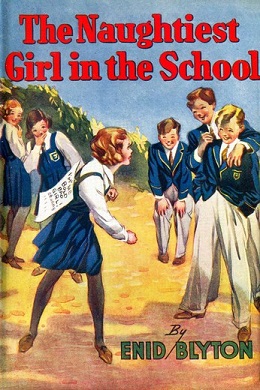
Image result for the naughtiest girl in the school

This has taken me a bit longer than I expected, mostly because it is hard to get back into the swing of indignantly recounting of events. You'll forgive me if my ability to reach the heights of outrage is a little impaired ...

So this rant thing has expanded somewhat. What was meant to be a standalone rant on a subject has blown out into a three blog post extrantaganza. THREE SEPARATE POSTS.

No wonder I balked at writing it the first time around.

So I decided to turn it into a rant sandwich, because there are parts of this chapter that I do like, or rather, that I COULD like, if it weren’t wrapped up in all the Enid-ness, that niggling wrongness that creeps through the story like yeast through bread.

The three posts on this subject will be as follows:


  • Poor Joan my fat foot;
  • Redeeming qualities; and
  • Why the regime really fails those who most need its benefits.

The chapter itself is just two short scenes. When last we left our (not so) intrepid heroine, she had just been caught going down to the shops by herself by no less a personage than the HEAD GIRL!!! (Dun dun DUUUUUUUUNNNNN). Rita, being one of the Keepers of the Zoo that is Whyteleafe, does what no one else has thought to do and actually TALKS to Elizabeth about why she is doing what she’s doing (I told you I actually like some stuff about this chapter). Then she goes and ruins it by appealing to Elizabeth’s sense of superiority and asks her to take pity on poor friendless Joan and to try and make her life a little easier. So Elizabeth tries – and Joan essentially tells her to @#*! Off, she didn't want Elizabeth lurking round her to laugh at her some more.

Gotta say, in that moment, I really liked Joan. I also have to say that part three of this rant-a-thon will come back to that ...

But herein lies my rant. Who is Joan? She’s a name that has popped up a few times in the book, one of the girls in the same room as Elizabeth. You don’t know much about her except that she is a bit obsessed with checking the post, and the other children mock her for this rather benign obsession.

So why should Elizabeth be friends with her? Rita explains

“She hasn’t a happy home, and she comes back to school very miserable each term. She worries about her father and mother all the time, because they don’t seem to want her or to love her. They never come to see her at half term.”

They don’t come at half term? The horror! That can mean only one of two things: either her parents are poor, or they are monsters! Either way, Joan clearly must have a rough trot of it. We’re expected to presume it’s the latter because Rita continues.

“ ‘Nobody knows except me,’ said Rita. ‘I live near Joan at home, so I know.’ “

Oh, so she knows the family? What a relief. That’s all right then – it’s fine that they are monsters, as long as they are the right sort, and not … *whispers* working class.

Rita continues

“I am telling you this, Elizabeth, because if you really do mean what you say about not wanting to make other people unhappy, you can just try to make things better for Joan. She hasn’t any friend, any more than you have – but for a different reason. She is afraid of making friends in case anyone asks her to stay with them for the holidays – and she knows her mother wouldn’t bother to ask any friend back to stay with Joan. And Joan is very proud, and can’t bear to take kindnesses she can’t return. Now – there’s a job for you to do! Can you do it?”

At first glance, you might be reading this and thinking “Fen, are you thick? Can’t you see that Rita is trying to encourage Elizabeth’s good qualities by focussing her on being kind to another person? Can’t you see how admirable that is?”

Others might say “WTF is she doing giving out personal information to an admittedly naughty child? Doesn’t she know what sort of damage could be inflicted by the untrustworthy being given confidential information?”

And I’d agree with you both – hence the rant sandwich.

But here’s my true problem with this: What reason is Elizabeth given to make Joan her friend? Pity. And while that is not a dreadful reason to befriend someone, it becomes problematic when it’s the ONLY reason to befriend someone.

You see, Elizabeth, being naughty in the Enidverse, is not permitted to have a friend with any redeeming virtues. She cannot make a strong friend, or a smart friend, or anyone with any social capital that may increase her social position. No, she has to have the ugly three legged dog with a flatulence problem as her friend.

So here are Joan’s Character traits:
  • She has red hair;
  • She has freckles;
  • She’s quiet;
  • She’s not smart – demonstrably bad at French and arithmetic;
  • Her parents are strange;
  • Her parents don’t write to her;
  •  Nevertheless, she writes to her parents;
  • Children laugh at her for this inequity of letters between herself and her home.

Basically, Joan has no redeeming virtues, according to Enid. She has nothing to offer except to make Elizabeth look good. She won’t challenge Elizabeth for brains or spirit (or looks, it’s implied – she never says Joan is ugly, but red hair and freckles are a marker for Enid. The freckles more than the red hair – In Malory Towers, Clarissa has red hair, glasses and braces, but becomes pretty in an ‘unusual’ way once the latter two items are gone). She can’t offer anything to Elizabeth on this reading, as Elizabeth is about to become her teacher and protector and superior. 

The only feature she has is that she appears to have is loyalty, which is praiseworthy, but which is also what you would attribute to your dog.

And She really is written as Elizabeth’s pet. She’s given no character, no agency, nothing that could teach Elizabeth anything – even the fact that she is pitiable doesn’t rouse any new feeling in our naughtiest girl – Rita brings the subject up because Elizabeth says she doesn’t like to see other people upset. You might argue that Rita was enacting a cunning plan, one which would put benefit both girls, and that her heart was in the right place. You might well do that. But she never says anything like "you could learn a lot from Joan" or says one single positive thing about Joan. No this is all about  Elizabeth and her doing a good deed for the day. 

I loathe this characterisation. I abhor it. I am willing to get a thesaurus out to detail how much I dislike it. Truly and passionately dislike it. I mean, really: She’s unattractive and stupid and not even her parents like her? THAT’S the girl you’re going to go with, Enid?

In Malory Towers, you had Sally and her jealousy about her new sibling, and you had Marylou and her timidity. But what they had was one isolated characteristic in an otherwise independent character. Sally is smart, Marylou is liked by other people. They are rounded characters who are part of the machine and accepted despite their negative characteristic.

With Joan, you get this piling on of (apparently) negative characteristics, with an underlying sensation that this is her fault. It is HER fault for expecting the basic level of communication from her parents, and the fact that she does not receive it is a point of mockery from the other children. Her red hair and freckles are noted by Enid, which is significant because she uses physical characteristics as personality markers (see Irish Nora, Fat Ruth, and pretty Elizabeth). Joan is part of the system, but is set apart by the others. She causes no trouble, she does all the right things, but the children ostracise her, with the reader invited to join in the mockery. 

To accept this description of Joan makes the reader complicit in this warped hierarchy within the school precinct. She doesn't fit in and it's her fault. Point at her and laugh, everyone. This underlying meanness, which underpins all of the “Rah Rah” decent Enid Britishness of the school, really leaves an icky feeling under my skin as I read. Enid has created this Lord of the Flies institution, one which on the surface is all about decency and fairness, but which, as you look at Joan and her treatment, exposes its rotten core at its heart. 

And the oddest thing about that core is that I don't think that the establishment can see it. They are too young to think it anything other than part and parcel of the whole Rah Rah thing. I think that irks me the most.

So much for part one of the rant-sandwich. Next time I shall tackle the chocolate chips in this turd cookie.


17 April 2018

Well, Look who Finally Decided to Grace the Internet with Her Presence

... Far too many of my posts start with an apology of this nature.

Anyway. Good Intentions time! As a sign of good faith - AN ACTUAL POST

Book recaps coming back soon. Promise. Cross my heart and hope to die. 

So here it is:

I have been pondering lately the wisdom of reading the latest line of Famous five books, those new novels revisiting our favourite celebrity quartet and dog as adults as they battle grown up issues – like gluten intolerance and alcohol dependence. On the face of it, this is something that would be right up my alley: it’s a mix of Enid and snark that I certainly appreciate, and it harks back to the comic strip production “Five Go Mad in Dorset”, which my sisters and I still quote at one another.

Huzzah! I thought when I saw them. More reading material for me!

Then I thought about it some more.

Part of the joy of rereading Enid as an adult comes from the fact that Enid is the straight man in the joke. One laughs and rages at Enid BECAUSE what she says and the opinions she espouses are honestly held and earnestly stated. She’s not in on the joke with the snarky reader. You can like or dislike the characters because Enid’s Earnestness separates the characters from the author. The joy of Enid is that you can enter into her sympathies to whatever extent you want. The power is in your hands. Enid writes children’s books for children, so adults can take away different things than was intended.

So when it comes to a snarky modernisation, I run into the issue of a change of perspective. Writing a children’s book for adults, you have to walk a fine line. Anne of Green Gables does it – the perspective of the narrator is clearly an adult voice, and the view taken of the child characters is fondly derisive.

Having not read any of them (I should point this out), the idea of the books that comes to me is that I’m being expected to enter into the views of the writer. I am expected to be complicit with the mocking of characters who have been re-rendered to be universally unpleasant. The characters and the opinion of the author are so intertwined that the reader cannot separate the story or the characters from the snark.

But I’ll admit that I might be a bit biased.

I’ve been burned by such literary retellings before – Pride and Prejudice and Zombies was (to me) a crushing disappointment (both the book and the film). Other than the seminal “Lizzie Bennet Diaries”, vlog classics retellings have rarely lived up to their initial promise. Stephenie Meyer tied sparkly vampires to romantic and gothic classics because … well, you gotta borrow storylines from somewhere.

Yeah, I may have had some bad experiences with non-canon material.

Even within the realm of Enid has this modern take on a classic burned me. Being a young naïve reader in the late 90s and early 2000s, I was overjoyed to learn that Enid had written 10 Naughtiest Girl books. Now, that number in and of itself was not a matter of suspicion to me at the time – the prolific typewriter basher Enid went more for bulk than nuance in her work. However, once I moved beyond “Here’s the Naughtiest Girl”, there was a change. The writing … improved. It was still mawkish and sentimental, and it carried something of the same cadence and vocabulary, but it was better. I felt betrayed.

THEN, I noticed:

  •         that the stories had become more toothless, while the dramatic  stakes apparently became apparently higher.
  •        Conventional and cohesive storytelling arcs were used.
  •        “Modern” issues like bullying, the environment, and dealing with underlying psychological issues sensitively became more apparent.
  •         Teachers became figures of overt authority in Whyteleafe school, which had previously flaunted its Lord of the Flies ambience as being the main selling point of the school’s non-traditional system.

I’d been “Sweet Valley’d” (you know, where one name is used to sell the work of a ghost writer – VC Andrews is another example).

Having realised the error in my understanding of the authorship, I was left feeling betrayed. How Dared they replace Enid with a competent alternative? How DARED they replace school fetish drivel with actual stories?

NO. I won’t have it. And although the grown up famous five might be funny and clever and much better than I expect, I’m not having anything to do with them either.


I’ve got enough to get through with the original …

21 September 2015

Oh My Stars ...


So, I was on the plane to Dubai, and on the inflight entertainment was a film called "Funf Freund 4". And it name checked Enid. So OF COURSE I had to watch it.
So as far as the characters are concerned, our core group is much as it ever was (although I'm not sure how old each of the Kirrin siblings is meant to be - and how far apart they were born - they all look about the same age). But after that, well, not so much.
Because I love you all, I just had to share the whole ordeal with you.
Story
We start with a Kitschy scene in an Egyptian market. There’s a street rat street ratting, and a nice fruit stall owner who goes for a walk and gets kidnapped by men in black robes, because DRAMA. And apparently he’s to be used as leverage to make someone do something.

With the three Kirrins’ dad Bernard for the hols (this being film four, the actor playing Uncle Quentin may have been done with this crap – I don’t see any reference to Bernard in the previous films), the kids see a preview of his new Egypt  exhibition with his pretty assistant Elena (and Dick and Julian flirting with the pretty lady is bad acting even if I don’t speak a word of German), including a 5000 year old mummy king. After locking the museum (with a plain handonmyheart house key) Anne forgets her glasses and they go back to get them, only to find a black hooded figure cutting  the mummy's  head open. The figure gets away, but the kids dig into the head  (I swear  I'm  not making this up - they dig into the head with their fingers) and find a legendary  amulet. One of three such amulets, presumably all inside brother mummy's heads. For some reason, it becomes imperative for them all to go to Egypt. By the way, no one is upset about the desecration of the mummy, they just congratulate the brats on finding the amulet …

So off they go. At the antiquities place, they find the head guy Farouk, who has one of the two other mummies said to have an amulet inside, and when he quite reasonably object  to cutting a 5000 year old mummy open, Bernard sends the kids off for his portable ultrasound which he always carries (and WHYWHYWHY DIDN'T YOU  DISCOVER  THE FIRST  AMULET WITH YOUR HANDY PORTABLE ULTRASOUND DEVICE?) The kids get pickpocketed by a street rat their age, and when they go back to the antiquities place, they find someone already cut the mummy’s head open, stole the amulet and framed Bernard, who is arrested for it.

Apparently, their only hope is to find the amulets, and also somehow they end up on the lamb from the German consulate (apparently - one handy thing about this story is that all the baddies either wear distinctive hoods or an item emblazoned with this HUGE ugly stylised bull – no one ever explains why a bull) who want to (quite reasonably) send the unaccompanied minors home. They go to pretty assistant Elena's house (she's Egyptian? When did anyone ever say she was Egyptian?) and find out her father is on holidays before the consulate dude shows up and chases them across rooftops, with Timmy barking inappropriately loudly.

They get away. They team  up with street rat kid, who has a crush on George, sneak into a billionaire's  party to steals the third amulet (wearing the worst disguises ever) only to have black robe people  steal the amulet first. Street rat picks the black robe’s pocket, and they scram, only  to be caught by the police, who are also in league with the bull people. They hand over the amulet and then set the police van on fire with the kids and Timmy in it. And sit back to watch the barbeque, laughing. Because they are all evil like that.

Now, you know law enforcement  has a problem when 4 kids (interestingly, George sits back and doesn't  help) can kick open the door to a paddy van. Baddies watch it explode from the front, kids disappear from behind. Fortunately, street rat knows a) super secret location of where shit is going to go down (which they conveniently overheard) and b) that Elena's father is missing, not on holidays (which seems to have no bearing on things right now).  He gets them camels to travel to super secret location, which they manage to lose in an hour or so, and so instead of heading back to the city and getting alternative  means of travel, our blockheads walk into the desert with no water. I swear, the best moment of the whole damn movie was when they decided to lay down in the desert and die. Timmy pulls a lassie and gets help from two old guys in a jeep, who take them to super secret location (which is only an hour away).

They get to super secret  location, and there's  this ritual going on. So at this point I though this was going to be actually interesting – like Famous Five go supernatural. I thought this whole conspiracy  was all about raising a mummy or something mystical like that. But no, the whole shebang, the robes, the rituals, the chant (yes they have a chant) is just so they can loot the tomb.

WTF?

There's  unnecessarily dramatic  revelation  that Elena was involved, because of course it was her father kidnapped to get her help in finding amulets. Then they're  all left in a room with a stone roof descending  to squash them.  They get out, trap the baddies, save Timmy (who was in a cage about to be fed to the spirits – again I say ???), then get away with the amulets to save Bernard, who was being tried 2 days after being arrested.

Look, I know some people have a dim view of Egyptian justice, but really?

Oh, and it turns out that Bernard's lawyer was also a bull person. They catch the baddie, blah blah blah, George  has a romantic moment  with street rat, everyone goes home.

Thoughts
I think I died a little on the inside.

Here's  my problems.

1. Modernising Enid  is not a terrible idea per se, but this was ridiculous. If was modernising without all the pesky modern things like mobile phones or other relevant  technology. Only street rat had a mobile, super secret location was well known and in all likelihood was on a map app. Security all round was pretty primitive, which was often handy for our intrepid heroes. I hate when modernising stories leaves out reality for the sake of plot. Modernise or don't; you can't have it both ways.

2. It wasn't  a good Famous Five story.  It was way too sentimental (Enid would definitely not approve of the emotion, and certainly not anything like a love interest), the Five were way too stupid to live, and there wasn't  enough glory at the end for the Five. Not to mention that it takes place OUTSIDE ENGLAND! How could it betray the motherland like that?

3. It wasn't  a good NOT Famous Five story. As a story it made no sense, it was painful to watch and i hated  it. And I  know it's  a German kid's  movie, but why did EVERYONE have to speak German?

4. It was bad Enid. The goodies were GERMAN! Black mark right  there. Not a single solid Englishman in the whole thing. It was ALL foreigners. And it was set in Egypt, which is probably very unhygienic. And Egyptians  were goodies AND baddies ... I  think Enid's head would explode from such a break  in stereotype (nuance – what is that?).  And a foreign  love interest? Not to be thought of.

I'll  have to look this series up now ...

31 August 2015

Insipidity Abounds

Well, I think I figured out part of the reason I never wrote about this chapter. You know, other than my laziness and procrastination reaching epic proportions. It’s BORING! I struggled to wring any snarky comments out of myself in relation to this chapter. It’s just so BLAH! But I can’t skip it just to get to my favourite hobby-horses of this book, which is a shame. So here we go.

Only three things happen:
  •  Elizabeth, feeling the pangs of conformity lost when abandoned by the right thinking majority after the meeting, happens to meet Mr Lewis, the probably-not-a-molester music teacher
  • Enid shows Elizabeth how truly wonderful Whyteleafe Prison is, as it is the school Enid should have attended had the had proper parents who knew what Enid deserved.
  • Elizabeth nevertheless continues her reign of terror over the easily horrified students and staff of Whyteleafe Prison.

And none of it is particularly interesting.

Let’s review each point properly, you know, since we’re here anyway.

Probably-not-a-molester Mr Lewis. Elizabeth, from whom the upstanding students of Whyteleafe flee, like good little sheep, decides to go to play the piano for a while. Which, it turns out, she is very good at (note this, I have a rant in me on the subject of Elizabeth’s perfections). She comes to a “little room” which I assume is a room to which children regularly have access, to find Mr Lewis playing the piano. Now this bothers me a little for the following reason: It’s his time off. I know a few teachers, and they guard their breaks quite zealously. I would assume a school like this would have had a separate teachers only area in which Mr Lewis might play in peace and not be disturbed.

Anyway, after establishing that Elizabeth is to have lessons with him, they decide that he can give her a lesson now, even though she mentions she’s leaving. The lesson consists of her playing a couple of pieces she already knows and him “tapping his foot” while she plays. He also manages to sound like he couldn’t give the smallest … daily bowel movement … about anything she has to say, all “dear me”’s and other non-statements which read as though he’s not even listening. I suppose he’s meant to come across as wise and kind, but I refuse to bow to Enid’s lazy implied characterisation.

The reason I call Mr Lewis “probably not a molester” is because he manages to also (in addition to his uninterested demeanour) convey a slightly creepy vibe to the adult reader. “You will be one of my best pupils” and “you must really be a very bad little girl” in their context in the story can be innocuous, but have those vague undertones of grooming … but unfortunately not enough for me to really make anything of them.

You see why I hate this chapter. I try, but there is just nothing to work with. And if there were material to work with, what fun we could have!

The second part is Enid school porn. There’s the glory that is Whyteleafe. Blah Blah Blah. It’s a list. You can escape to the village in groups, you can go to the cinema, you can go riding every day. There’s music concerts, there’s a dance every week … It sounds like one of those summer camps – like in Dirty Dancing.

Oh dear, I just tried to picture Elizabeth as Baby. No … just no.

Also, by the by, there is the possibility of friendship For Elizabeth. Joan tries to make friends with Elizabeth, and gets rejected. I tell you I have a rant coming up about that  … but not yet.

Anyway, with all the glories of Whyteleafe, Elizabeth is determined to be naughty. She puts a cat in the teacher’s desk ( … I can’t even), she turns the clock in the classroom back 10 minutes to miss arithmetic, she gets sent out of class regularly. Ho hum. Enid really isn't trying here. What does bother me is the fact that all the children laugh at her tricks, then complain about how tiresome they are. YOU CAN’T HAVE IT BOTH WAYS. If you laugh, you are complicit … but I’m still not worked up enough to rant. There are a couple in me, but just not today.

Elizabeth caps her naughtiness off by going to the village ALONE. But only after she tried to be good and everyone told her to go away. Ruth in particular, feeling her precarious social standing, makes it clear that  she won’t be seen with someone who “doesn't know how to behave in the road”. Now, beside the awkward phrasing, what is this road etiquette? Is she afraid that Elizabeth will moon  cars, or play chicken with a driver? They are walking down a road! What can possibly go wrong?
Anyway, that’s it really. This mediocre chapter is brought to an end when Elizabeth is caught by the head girl. I promise there’s a rant there. My sincere apologies for the lacklustre return, but this chapter is like reheated potatoes – floury and cold in the centre.

Next time: Why gossiping is NEVER acceptable behaviour and a prelude to my major squick with this book! Stick with me, people, good times are coming!


26 August 2015

... yeah

So ... been a while, right?

It's unbelievable. You blink and nearly three years pass. My current Blyton under review followed me around like Banquo's ghost, silently accusing from bedside tables, suitcases and bookshelves, until I buried it somewhere in amongst my books.

However, as my books have been in storage for the better part of the past year, I have had to concede that if I want to continue to the end of this book (as has always been my intention) I would have to bite the bullet and get a new version. So I bought one on my tablet.

My whole being revolted against it. Even as I confirmed the purchase my Blyton-loving soul recoiled from the modern cover. I mean, really, the book is littered with these modern artist renderings of scenes in the book, while the prose remains steadfastly set mid-last century. It's jarring and hurts my poor little sense of the fitness of things.


Anyway, this post is just a heads up that I am coming back to this - and I'll finish it. AND I'm taking requests as to what to read/review next. A very kind friend has promised me a box of Blytons ... is it ridiculous that this is some of most exiting news I have had this year?

12 July 2012

First Day Disappointment

All of a sudden it’s been 6 odd months. Good work me. Seriously, I have been looking at this book on my bedside table for the past six months (no matter where I have been – I took it to Europe and the middle-east with me in January) thinking “I’ve got to do some work on that ... I’ll do it tomorrow”. But of course I never do. Such is my life.

 I'm not promising much with this chapter - it's a bit blah (filler before we get to the next chapter), but I'm back online, so one miracle at a time is all you can expect right now!

 Anyway, to recap the story thus far: Elizabeth is a pretty normal child (by which I mean self-centred and rather bratty – and don’t get up in arms over that, you know I’m right) who has been accustomed to accepting that she is some sort of devil spawn. She has become a burden to her hard-living parents who want to go on a cruise. They ingeniously decide that it’s time to indoctrinate the poor girl in the time-honoured fashion of packing her off to school and having someone else do the actual work of raising her. So she goes to school. Said school turns out to have reverted to some sort of Lord of the Flies meets 1984-esque scenario in which Elizabeth is deemed persona non grata on the first day. We left our intrepid heroine on the cusp of sleep, vowing vengeance and declaring that she’ll be home by half-term.

 We open the scene with some bell indicating that it’s time to get up. Nora the enforcer tells everyone, rather unnecessarily that it’s time to get up; Elizabeth “cheekily” decides to stay in bed (she is such a rebel!). Of course Irish Nora doesn’t like this, so she and Fat Ruth (I’m not making this up – she’s called “plump Ruth”) pick up E’s mattress and tip Elizabeth onto the floor – because that’s not at all an overreaction. When Elizabeth objects, Nora threatens to do an unnamed form of violence on the girl because “Monitors do that sometimes, you know”. I love how Whyteleafe rolls: do what we say or we’ll kneecap you! I can just picture Nora waiting in the dorm with knuckle dusters.

 Elizabeth, of course, decides that as open rebellion is not feasible, guerrilla tactics are advisable. So she decides to wear socks instead of stockings down to breakfast. Ooo-er. (just on a side note – I’m not even two pages into this chapter and already they have set times to get up, eat breakfast, rules as to appropriate footwear – what sort of child perpetuates this arrant nonsense? Seriously – you can’t wear socks???). But just when you think Elizabeth has finally given one to the man (or child), she is shamed into the stockings. Sigh.

 School-wide roll-call comes up after breakfast. In this strange event, boys and girls are segregated (why bother with a co-ed school if you're just going to split them up?) and formed up into rows before the roll is called, then the children march out to music. Yes, MARCH. I bet it's not even normal marching - I bet they have to goose step out of the hall. The school strikes me as that sort of place. I wonder whether they have to salute their glorious leader while they're at it?

 This school really gives me the heebie-jeebies: violent monitors, children doling out punishment to one another, lives lived according to a series of bells, no socks allowed, and a vaguely militaristic assembly? THIS is a progressive school? I’d hate to see what Enid thought was old-fashioned. The more I read about this school, the more I’m in E’s corner, willing her to some drastic feat of naughtiness that will release from this hell-hole!

 And it seems we may finally get the chance see such a feat, as class finally begins (and Elizabeth gets a seat in the back row, which she likes because you can be naughty there. How she knows this, having never gone to school before, puzzles me a little). At first we are disappointed, Elizabeth being high on the fresh paint fumes in the classroom to such an extent that she gets a “VERY GOOD” on her dictation. She soon comes to her senses, however, and embarks on her first deed of the mischievous variety: flicking paper at various people in the room.

 *headdesk*

 Really, I despair of the idiot. Go hard or go home, Elizabeth; if you want people to take you seriously as a delinquent, hike up your skirt and do some serious damage. Throw a child through the classroom window, get into a proper fight, trash the teachers’ lounge. Don’t flick freaking PAPER!

 I suppose, in her defence, she does talk back to the teacher, but as the chapter ends with E knuckling under AGAIN (and promising to behave), you can’t really give the girl too much credit. Another disappointing episode in Elizabeth’s school career.

 One thing to note: we learn that Elizabeth likes music in this chapter. It should be noted, as it comes up later in the book, as there is nothing the regime won’t do to ensure the loyalty of their adherents.

 This chapter feels a bit like a filler chapter, and I suppose it is. But the next chapter ... school meeting time! I shall be updating you on that little gem anon (less than 6 months this time – I promise!)

18 November 2011

The iron fist in the velvet glove

I can hardly believe that chapter five is reached and Elizabeth STILL hasn't got past her first day.

I could rant about the mixed philosophy of the school yet again, but I think it would be better just to let the principals of the school tell you themselves (for some reason there are two - I don't know why, they don't seem to actually do anything except lollop about in their drawing room). Elizabeth goes to see them this chapter (can I say that I NEVER went to see a principal when I started a new school - and I started at new schools four times in high school). Here's what they have to say to Elizabeth (after laughing delightedly when she said that she was going to be naughty):

"We never punish anyone, Elizabeth," said Miss Best, suddenly looking stern again. "Didn't you know that?"
"No I didn't," said Elizabeth in astonishment. "What do you do when people are naughty, then?"
"Oh, we leave any naughty person to the rest of the children to deal with," said Miss Best. "Every week the school holds a meeting, you know, and the children themselves decide what is to be done with boys and girls who don't behave themselves. It won't bother
us if you are naughty - but you may perhaps find that you make the children angry."

A cold shiver ran down my spine when I read that passage. I pictured them sitting there with sneaky hip flasks getting quite squiffy during their conversations with the new brats (it's what I'd do). And that is all I'm going to say about it (there must be something terribly wrong with me today if I'm not running at that red flag).

This chapter "Elizabeth is naughty" exposes Elizabeth to the true brutality that Whyteleaf School authorities (by that I mean the students) are capable of.

Basic plot: Following that not very encouraging meeting with the principals, Elizabeth goes to supper where she is still in food coventry, makes a joke (Enid never did have a very good sense of humour, so I won't try to repeat the joke), then finds out that she has an assigned bed-time.

Elizabeth, predictably, objects to going to bed at 8 p.m.

Irish Nora's response?

"No wonder you're such a cross-patch! my mother says that late hours make children stupid, bad-tempered, and slow."


I rather love that response: it's supremely arrogant (in that Nora has known Elizabeth for less than half a day) and slavishly apes an absentee parent all in one. Nora, however, is a true daughter of Enid: she doesn't stop her parent aping there. No, she takes it to its logical conclusion and decides become an absentee supervisor herself, expecting Elizabeth to do as she's told while she buggers off back to the playroom.

In a massive piece of perversity, Elizabeth doesn't go to bed (gasp). She instead goes to play on the swings (honestly, playroom, swings? If you're going to be naughty, steal some cigarettes and go sit behind the bike shed!). Honestly, this girl is made to be a rebel. I mean, we all know the dangerous effects of swing sets, don't we? It's a slippery slope to slides (I tried not to make the pun, really I did), then merry-go-rounds before she's a full-on jungle gym junkie. Tsk tsk ...

Fortunately for Irish Nora, back-up is at hand to save Elizabeth from this slippery slope. A boy comes along and orders her to go to bed or he'll dob her in to the other kids (fittingly, we're not told which boy - and neither is she - what she doesn't know, she can't dob. Gotta love corrupt government).

"Pooh!" said Elizabeth, and she swung herself very had indeed, put out her foot and kicked the boy so vigorously that he fell right over. Elizabeth squealed with laughter - but not for long! The boy jumped up, ran to the swing and shook Elizabeth off. He caught hold of her dark curls and pulled them so hard that the little girl yelled with pain.
The boy grinned at her and said "serve you right!"


That fight scene started so promisingly. Finally, I thought, Elizabeth is going to actually do something worth her title. Then it was matched and bettered by the other kid and my hopes were dashed.

It would have been so much better if he had hit his head or done some actual injury that would REALLY get Elizabeth in to trouble. All that happened was that Elizabeth came out second best in a fight, and we got a glimpse of the iron fist inside the velvet glove. How is Elizabeth supposed to be naughty when the corrupt system in which she is operating allows right-minded individuals to commit violence with impunity while punishing the minority for the same infractions? This is so unfair to we readers ...

Because of course Elizabeth is going to be dobbed in to the authorites by this unknown boy. And did I mention that he's a monitor?

Here ends Elizabeth's first day in Blytonia. The score? Elizaeth 0, Blytonia 4 (perhaps 5). We'll see how day 2 goes next time.

03 November 2011

The greatest disappointment

I went shopping today.

I was going clothes shopping, but as invariably happens I got sidetracked by all the pretty books in the bookshop. And then I remembered that there is a new Jasper Fforde book out this month and the clothes were forgotten ...

Anyway, I came across the most wonderful sight whilst I was browsing: A large picture-book hardback version of the Magic Faraway Tree.

I was instantly besotted. It took me right back to a similar version I had growing up (I think that they just changed the cover and re-released the version I had as a child). I grabbed the book, all ready to buy it and put it aside for the grandchildren (perhaps not my own grandchildren, just some poor benighted souls who may not be exposed to the glorious wrongness of Enid) when I had the foresight to open it.

I was instantly confused. The story was about Joe, Beth, Frannie, and their cousin Rick. For a moment I thought that this was a new story or one about characters I had not come across before - I mean, Enid DID write well over 800 books, I may well have forgotten one or two. But then I realised what the abomination really was: it was a re-worked version.

Joe, Beth, Frannie, and their cousin Rick were the updated versions of Jo, Bessie, Fanny and Dick. Dame Slap became Dame Snap and no longer hits people (thus losing all of her menace).

It was terrible. My beautiful picture book had been vilely defaced. I'd heard about such a travesty occurring, but to see it was worse than heart-breaking. I departed that place, the burning gall of disappointment threatening to choke me as I went ...

Let me know if you have had similar disappointments with the works of the great lady.

27 October 2011

Venus Fly trap

So we come to chapter three: Elizabeth makes a bad beginning.

We left our abandoned puppy spurning the affections of a teacher (that sounds sooooo dodgy) as she stared up at the kennel she was to call home. I assume it had kennel-like aspects to it, as Enid never bothers to describe the place (not like the castle of Malory towers, where you were subjected to a minute description every time Enid ran out of storyline).

Predictably, the first thing they do is eat. This is an Enid Blyton story, after all. And I have it on good authority (Enid's) that not liking rice pudding makes you a bad person:


“There was hot soup first, then beef, carrots, dumplings, onions and potatoes, then rice pudding and golden syrup. Elizabeth was so hungry that she ate everything, though at home she certainly would have pushed away the rice pudding.”

That kinda makes me wish that I didn’t throw away the rice pudding I bought the other week when I was shopping (although in my defence, it was artificially sweetened and tasted like crap – I’m not bad, honest I’m not).

So all the kids sit around eating and discussing the inappropriate and irresponsible presents that their parents gave them at Easter (what kind of moron gives a child a PUPPY, when the child lives at boarding school and can’t take the pet with them? Call the RSPCA!). Elizabeth, eating rice pudding (which makes you good) remembers that she wants to be thought of as bad, so takes the opportunity to compare a teacher to a guinea pig.

Whoa – living life on the edge, aren’t we?

Anyway, all the other kids get all pissy about that, then the fun comes. Elizabeth gets shown to her dorm. We’re given, of course, a lengthy description of polished floor boards and blue rugs and trunks that the menials have lugged up the stairs for these little brats.

And we meet Nora.

Do you want to know what Nora is like? She’s Irish. Seriously, that’s Enid’s most used adjective with Nora O’Sullivan (Irish name – check). I am not kidding. The first time there is any description of her, it’s a description of her “blue Irish eyes”. Because all blue eyes are automatically Irish, of course. Of course this sly little adjective colours the way you see Nora (later on, she’s described as “the angry Irish girl” and another time Elizabeth is frightened of her because she’s “big and strong” – so I see a rugby forward with anger management issues). She is, however, heart and mind part of the establishment.

It’s Nora who tells the new girls what form the establishment takes. The school’s co-ed, which is a rarity, Enid liking her children segregated and all.
Anyway, we learn rules like:
- Only 6 things are allowed on your dressing table
- No matter how much money your parents give you, you have to put it in a box and the school shares it out by way of set pocket money
- The sharing of extra funds is determined at school meetings,
- Bad children are fined at school meetings
- School meetings are run by students (teacher participation is sporadic and rare – they’re probably off on holidays with Elizabeth’s parents ...)

You know, I thought the indoctrination by students was bad at Malory Towers where you had strict teachers doling out punishment. But trial by (Blyton) students? No ... just, no.

The school is a progressive school, based on an actual independent school in the UK called Summerhill. Summerhill is a democratic community, governed by school meetings run by the students, and where all classes are optional. The ethos of that school is “freedom, not licence”. The whole idea is that the child is meant to know best what how to learn. Incidentally, the school still runs.

I can see how Enid would be attracted to such an idea - kids governing themselves without pesky parents. I can also see where Enid struggled with it. She is a traditionalist at heart, with her school having compulsory uniforms, compulsory classes, and a militaristic feel from the student body that is slightly alarming. It’s as though the students are inches away from starting a cult or something, there’s just this menacing feel that I can’t quite like, as though all they need is one student to come along and promise more pocket money, harsher penalties for offenders and the extermination of the Jews or something ...

You know what it is? It’s the shadow of Lord of the Flies. There is this bullying feel to the whole place that dresses up as school spirit. The children feel obliged to teach each other lessons all the time, so they’re ALWAYS on other student’s backs to conform conform conform. And then there’s public humiliation – because ALL punishment and trials take place in front of the WHOLE school, which of course is the best way to deal with adolescents ...

In real life, Summerhill School apparently runs quite well, but we are in Blytonia, where, at the end of the day, children DON’T know best unless they are parroting what their absentee parents tell them (in an effort to win their love). And Blytonia, don’t forget, has the angry Irish girl working as an enforcer. The whole thing is just an endorsement of Enid’s idea of (lazy) parenting really – it’s taken it beyond mere absenteeism to actually having the children do all the work. Quite frankly, it’s Enid’s own personal wet dream.

Anyway, we end the chapter with Elizabeth saying to the others that she isn’t going to share her food. DUN DUN DUUUUUUUUUNNNNNNNN .....

09 June 2010

Upper Fourth at Malory Towers Pt 1


Another example of the mid-nineties misleading advertising - is there anything in that picture that screams mid-century boarding school? Yeah, that's what I thought.

You thought I’d forgotten Darling Darrell, hadn’t you? I haven’t. She’s still on my mind, even while I’m supposed to be on holidays. Enid didn’t take holidays (well she did, but she used all of the information in her books, so it was more like research trips ...)

I thought I’d start writing this as I sat in LAX terminal three waiting for my delayed plane, tired, queasy and watching a bunch of children play a game in which the main action is hitting one another and giggling. Happy days. It has been 7 June for 2 days, and I have come to the decision that I am over this particular day. (I fell asleep in the terminal soon after writing the above – I’m now in San Francisco, hiding from the chilly wind and Karaoke night)

But back to the matter at hand, which is Darrell’s latest stint in juvie. We have some fun in this book – so much that I am going to break up this into at least two, perhaps three, entries.

My fist entry is going to be background information and Super Smackdown, the second will be fourth form bitches and the last will be MT: the next generation.

So, I shall begin.

Many people have made a comparison between the two most beloved authoresses of children’s literature over the past century: Enid Blyton and JK Rowling. Detractors will say that Ms Rowling stole (or borrowed heavily on) this tradition of going-away-to-school stories, of which Enid was a past mistress. It’s so clear that JK hasn’t an original bone in her body given the blatant copying: Enid’s books are set at school, so are Rowling’s; most of Enid’s characters are students, so are Rowling’s. (Do you see all of the similarities? CLEAR copying).

You might notice that I don’t really subscribe to this view of HP plagiarism. At least I didn’t, not until I started reading Upper Fourth at Malory Towers. All at once, I was overcome by the clear deception that I had bought into, thinking that JK was an original writer. If you read Upper Fourth and then HP and the Order of the Phoenix, you’ll start seeing strange similarities. Darrell has her School Certificate (precursor to the O-levels, which then became the GCSE exams – I actually wrote an entire entry on this topic, but fortunately you are to be spared this piece of nerdiness – I left my usb with it at home); Harry has his OWLs. Darrell faces the challenge of being head-girl of the form; Harry has Voldemort’s return to contend with. Both deal with these pressures in the same way – by retreating into a bubble of anger that eventually bursts forth. Harry yells at Dumbledore – Darrell beats the crap out of a first-former.

Can you see how Rowling has copied? Taking this highly original story by everyone’s favourite author, Rowling callously appropriated it and planted it in her story – the responsibility, the anger, and spurts of irrational violence. Harry might as well wear a sign saying “I’m a PMS-y school-girl with a stupid name”.

So this is basically the storyline – Darrell goes back to school, gets made head-bitch of the form, the form does something naughty and a first-former (who I’ll talk about in my ‘next gen’ post) finds out. When she threatens to snitch, Darrell loses it well and truly – and is found a couple of minutes later violently shaking a pre-pubescent girl as violently as a person such a Darrel can. Unfortunately, because a teacher actually witnessed the violence, they can’t turn a blind eye, and sack her as head bitch (in spite of her clear skills in the area). She mopes around for the rest of the term about not being head-girl (OH OH OH – HARRY KEPT BITCHING ABOUT NOT BEING MADE PREFECT! Rowling strikes again!). All turns out just fine in the end, by the way – Darrell solves a perplexing mystery and earns enough brownie points to earn back the posish. Hoorays all-round as the mindlessly violent triumph again!!

I’ve mentioned before how fortunate Darrell was in her choice of victims – all vulnerable and alone at the time of the attack – well the little first-former is no different. Darrell can’t be more that a foot taller than her and no more that 10-20 kgs heavier – there was nothing wrong with what she did – she was probably just teaching the stupid girl a lesson. And the punishment? The teachers basically say “I’m going to do the worst thing I can think of – I am going to take away my trust ...” They don’t send her to the headmistress? No detention? Suspension? Court-appointed psychologist? Nope – just their trust ... how terrible!

Look at me, being all laconic! I am actually going to finish the post here ... but keep looking out for the next two for this book – I have some plane flights coming up, so I’ll write them then ...

Laters!

03 April 2010

Tea and Scones

I have a box of books under my bed. It's hidden behind the boxes of old textbooks and chicklit I am too embarrassed to put on my bookshelf, and it's my deepest, darkest, most guilty secret. It's the box of books that I turn to in my hours of trial to give me a little glow of happiness.

It's a box of Enid Blyton books.

They can be read in an hour, they have as much emotional depth as a teaspoon, and you always reach the end feeling morally superior because you would never be that politcally incorrect ... all in all, they are the perfect antidote to a shitty week at work!

I'm not sure that I will ever outgrow that desire to become an inmate of Malory Towers, but coming back to them a decade later, I'm pulled back in not by the wholesome jolly school children who manage to have so many unlikely adventures, but by all the other things that you can read into those stories, the twisted aspects of Blyton's mind that find their way onto paper.

Well, that and the food - the woman's obsession with food is legendary - I swear that she is the only writer who has ever made me feel like eating pickles.

Anyway, over the course of this blog, I plan to share with you the sick genius of Madame Blyton, and any other childhood favourites that come to mind ...

Watch this space ...