Showing posts with label book 1. Show all posts

05 June 2018

This Filling Certainly Looks like Nutella ...


I think I'm getting better at this "Promptness" malarkey. (I wrote this line two weeks ago, in grand hopes that it would prompt me to get this out within a week of the last post. Stop laughing.)

Well, I promised choc chips in this turd of chapter (and Facebook keeps emailing me to berate me for not posting more frequently, because you miss me?), so I present to you:

Part Two of the Extrantaganza: Things I Actually like in this chapter.

What is this? There is something to like in anything Enid put down on paper? This will not be absolutely negative about her work? NEVER! I came for the clutching of pearls! I came for mockery of outdated stereotypes! I CAME FOR BLOOD!

Sorry to disappoint, but I thought that, in fairness, I should present some positives in this story. I don't know exactly whether my opinion is that these qualities are true qualities, or whether I have just been lulled into lowering my standards so that I accept "house trained" as a cardinal virtue. But I'm going to follow this stream and hope I don't get stuck along the way without a paddle.

So what do I like?

Well, to start, I have begun to like Elizabeth, you know, under all the tepid rebellion and Ye Olde Englishe right-sorted-ness. The realisation that this book is Malory Towers with Gwen as the heroine has worked powerfully upon me. Really softened me up.

Or perhaps it was this:

"'You know, Elizabeth, it is strange that no one would go with you,' said Rita. 'Doesn't anybody at all like you?'
'No,' said Elizabeth. 'Don't you remember,  Rita, that I told you I was going to be as horrid as could be so that I could go home? Well, everybody thinks I am very horrid, so nobody wants to talk to me or walk with me.'
'And are you really horrid?' asked Rita.
Elizabeth looked up. She was surprised that Rita should talk to her kindly, after having found her out in disobedience.  But Rita did not look angry, only very understanding and wise.
Elizabeth thought for a moment. Was she really horrid? She remembered all the governesses she had had. She remembered that Miss Scott wouldn't stay with her. Perhaps she really a truly was a horrid girl. 
'I don't know, ' she said at last. 'I believe I am horrid really, Rita. I make myself horrider than I truly am - but all the same, I believe I can't be very nice.'
'Poor little Elizabeth!' said Rita. 'I wonder what has made you grow so horrid?'"

Now, what's to like in this? I know you are reading this thinking "But this is appalling!" And trust me, the last part of my rant revisits this very passage.  And I did say that my bar was pretty low by now. But there are a couple of highlights.

Firstly, I just love how few illusions Elizabeth has about herself. She doesn't talk about how she knows how to behave really, and is just pretending;  she doesn't talk about how she would like to be good but doesn't know how; and she doesn't venture into the realm of self pity. No. When asked whether she really is horrid (which is worse than naughty, as it includes an implication that there is something about her personality that is lacking) she thinks about it and says "yeah ... I probably am." I thoroughly enjoy the lack of ego in that moment. It's just a piece of unflinching honesty, if not to say an epiphany of self-insight.

Added to that, I like how un-Enid this seems. It distinctly lacks any Rah Rah stiff upper lip-ness (lip-ity? lip-nacity?) This is almost freudian for Enid, this self-intropection. Never fear, I stopped the quote just before Enid drifted back into Enidness, and it backslides straight to "you look like such a nice girl" after this extract (so those of you who read Enid for her utter superficiality can breathe a sigh of relief). But for a moment, just one shining moment, someone is asking Elizabeth "what's going on with you?" rather than telling her "you need to do this". Low bar or not, it is a little moment of beauty.

And that's the thing. This moment, it's  the first time anyone has tried to get to know Elizabeth at all. And I don't mean the usual Enid snobbery of getting to know a person (i.e. who mummy and daddy are and are they the right sort of people - because we can't associate with the nouveau riche ...). The focus on Elizabeth's naughtiness and how she doesn't fit in, this masks the utter lack of social conscience on the part of all the oiks she shares a class with. You know, the ones so set on perpetuating the system that they forget to be human. They forget even why the system is supposed to exist, yet cling to the facade that it has created to protect itself from intruders. The problem is, there IS NO INSIDE to Enid's system. It's just a bunch of children clinging to the outside like barnacles and pretending they are on the inside ... or believing that they are.

Rita asks why. Why don't the others like you? Why are you acting like this? Is this the real you? Why is not a question asked enough in Enid-topia. System blindness is mandatory - no questioning of the way things are is allowed. I'll admit that I am reading WAY too much into this, but I'm pulling this string as far as it will take me!

I'll also give Rita credit for good intentions for her stratagem in throwing Joan and Elizabeth together. See my previous for my dislike of the actual stratagem, but the intention to foster kindness is praiseworthy (she does lose points for assuming Elizabeth is nice because she looks nice, though ...). And it must be remembered that Rita is not only a product of this system (the flaws of which I am still to get to), she is also only old in Elizabeth's eyes. And Elizabeth is ten years old. We're dealing with a teenager trying to develop a sense of kindness in an unsympathetic environment. So kudos to her.

Aaaaaaaand that's it. All I got on what I like. Let me know: am I being brainwashed by Enid into lowering my standards? Are you lowering yours? Actually, I really do want to know that - does the Enid effect work second-hand??? Iiiiiiiiiintresting ...

Next time on the final part of the extrarantaganza, we venture into the next chapter. And look more at these poor children clinging to the facade of the system.



22 May 2018

Poor Joan My Fat Foot!


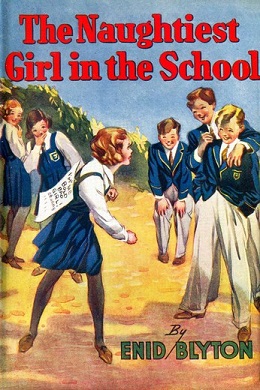
Image result for the naughtiest girl in the school

This has taken me a bit longer than I expected, mostly because it is hard to get back into the swing of indignantly recounting of events. You'll forgive me if my ability to reach the heights of outrage is a little impaired ...

So this rant thing has expanded somewhat. What was meant to be a standalone rant on a subject has blown out into a three blog post extrantaganza. THREE SEPARATE POSTS.

No wonder I balked at writing it the first time around.

So I decided to turn it into a rant sandwich, because there are parts of this chapter that I do like, or rather, that I COULD like, if it weren’t wrapped up in all the Enid-ness, that niggling wrongness that creeps through the story like yeast through bread.

The three posts on this subject will be as follows:


  • Poor Joan my fat foot;
  • Redeeming qualities; and
  • Why the regime really fails those who most need its benefits.

The chapter itself is just two short scenes. When last we left our (not so) intrepid heroine, she had just been caught going down to the shops by herself by no less a personage than the HEAD GIRL!!! (Dun dun DUUUUUUUUNNNNN). Rita, being one of the Keepers of the Zoo that is Whyteleafe, does what no one else has thought to do and actually TALKS to Elizabeth about why she is doing what she’s doing (I told you I actually like some stuff about this chapter). Then she goes and ruins it by appealing to Elizabeth’s sense of superiority and asks her to take pity on poor friendless Joan and to try and make her life a little easier. So Elizabeth tries – and Joan essentially tells her to @#*! Off, she didn't want Elizabeth lurking round her to laugh at her some more.

Gotta say, in that moment, I really liked Joan. I also have to say that part three of this rant-a-thon will come back to that ...

But herein lies my rant. Who is Joan? She’s a name that has popped up a few times in the book, one of the girls in the same room as Elizabeth. You don’t know much about her except that she is a bit obsessed with checking the post, and the other children mock her for this rather benign obsession.

So why should Elizabeth be friends with her? Rita explains

“She hasn’t a happy home, and she comes back to school very miserable each term. She worries about her father and mother all the time, because they don’t seem to want her or to love her. They never come to see her at half term.”

They don’t come at half term? The horror! That can mean only one of two things: either her parents are poor, or they are monsters! Either way, Joan clearly must have a rough trot of it. We’re expected to presume it’s the latter because Rita continues.

“ ‘Nobody knows except me,’ said Rita. ‘I live near Joan at home, so I know.’ “

Oh, so she knows the family? What a relief. That’s all right then – it’s fine that they are monsters, as long as they are the right sort, and not … *whispers* working class.

Rita continues

“I am telling you this, Elizabeth, because if you really do mean what you say about not wanting to make other people unhappy, you can just try to make things better for Joan. She hasn’t any friend, any more than you have – but for a different reason. She is afraid of making friends in case anyone asks her to stay with them for the holidays – and she knows her mother wouldn’t bother to ask any friend back to stay with Joan. And Joan is very proud, and can’t bear to take kindnesses she can’t return. Now – there’s a job for you to do! Can you do it?”

At first glance, you might be reading this and thinking “Fen, are you thick? Can’t you see that Rita is trying to encourage Elizabeth’s good qualities by focussing her on being kind to another person? Can’t you see how admirable that is?”

Others might say “WTF is she doing giving out personal information to an admittedly naughty child? Doesn’t she know what sort of damage could be inflicted by the untrustworthy being given confidential information?”

And I’d agree with you both – hence the rant sandwich.

But here’s my true problem with this: What reason is Elizabeth given to make Joan her friend? Pity. And while that is not a dreadful reason to befriend someone, it becomes problematic when it’s the ONLY reason to befriend someone.

You see, Elizabeth, being naughty in the Enidverse, is not permitted to have a friend with any redeeming virtues. She cannot make a strong friend, or a smart friend, or anyone with any social capital that may increase her social position. No, she has to have the ugly three legged dog with a flatulence problem as her friend.

So here are Joan’s Character traits:
  • She has red hair;
  • She has freckles;
  • She’s quiet;
  • She’s not smart – demonstrably bad at French and arithmetic;
  • Her parents are strange;
  • Her parents don’t write to her;
  •  Nevertheless, she writes to her parents;
  • Children laugh at her for this inequity of letters between herself and her home.

Basically, Joan has no redeeming virtues, according to Enid. She has nothing to offer except to make Elizabeth look good. She won’t challenge Elizabeth for brains or spirit (or looks, it’s implied – she never says Joan is ugly, but red hair and freckles are a marker for Enid. The freckles more than the red hair – In Malory Towers, Clarissa has red hair, glasses and braces, but becomes pretty in an ‘unusual’ way once the latter two items are gone). She can’t offer anything to Elizabeth on this reading, as Elizabeth is about to become her teacher and protector and superior. 

The only feature she has is that she appears to have is loyalty, which is praiseworthy, but which is also what you would attribute to your dog.

And She really is written as Elizabeth’s pet. She’s given no character, no agency, nothing that could teach Elizabeth anything – even the fact that she is pitiable doesn’t rouse any new feeling in our naughtiest girl – Rita brings the subject up because Elizabeth says she doesn’t like to see other people upset. You might argue that Rita was enacting a cunning plan, one which would put benefit both girls, and that her heart was in the right place. You might well do that. But she never says anything like "you could learn a lot from Joan" or says one single positive thing about Joan. No this is all about  Elizabeth and her doing a good deed for the day. 

I loathe this characterisation. I abhor it. I am willing to get a thesaurus out to detail how much I dislike it. Truly and passionately dislike it. I mean, really: She’s unattractive and stupid and not even her parents like her? THAT’S the girl you’re going to go with, Enid?

In Malory Towers, you had Sally and her jealousy about her new sibling, and you had Marylou and her timidity. But what they had was one isolated characteristic in an otherwise independent character. Sally is smart, Marylou is liked by other people. They are rounded characters who are part of the machine and accepted despite their negative characteristic.

With Joan, you get this piling on of (apparently) negative characteristics, with an underlying sensation that this is her fault. It is HER fault for expecting the basic level of communication from her parents, and the fact that she does not receive it is a point of mockery from the other children. Her red hair and freckles are noted by Enid, which is significant because she uses physical characteristics as personality markers (see Irish Nora, Fat Ruth, and pretty Elizabeth). Joan is part of the system, but is set apart by the others. She causes no trouble, she does all the right things, but the children ostracise her, with the reader invited to join in the mockery. 

To accept this description of Joan makes the reader complicit in this warped hierarchy within the school precinct. She doesn't fit in and it's her fault. Point at her and laugh, everyone. This underlying meanness, which underpins all of the “Rah Rah” decent Enid Britishness of the school, really leaves an icky feeling under my skin as I read. Enid has created this Lord of the Flies institution, one which on the surface is all about decency and fairness, but which, as you look at Joan and her treatment, exposes its rotten core at its heart. 

And the oddest thing about that core is that I don't think that the establishment can see it. They are too young to think it anything other than part and parcel of the whole Rah Rah thing. I think that irks me the most.

So much for part one of the rant-sandwich. Next time I shall tackle the chocolate chips in this turd cookie.


15 November 2012

How the socially undesirable gain acceptance in Blytonia


Yep, I managed to disappear again. Well done me. I’m full of those damn good intentions, in that I prop my copy of Blyton on my desk (where it will shame me for not writing up the next chapter) and SWEAR that I will write it TONIGHT … then decide at 10pm that I really couldn’t do the chapter justice and I really should watch the next episode of the latest K-Drama I’m hooked on. Life is tough when there’s K-Drama about …

So anyway, I left you on something of a cliff hanger last time, what with the dreaded school meeting coming up and everything. This meeting IS the entire chapter. And I can tell you – I would never send my precious spawn (should they one day exist) within ten miles of this hell-hole.

So, it’s a school run by children – and what do they do? Adopt the trappings of their lost grown ups (three teachers sit up the back during this thrilling chapter, but “did not seem to be taking a great deal of notice of what was going on.” Of course not – why do the job you’re paid to do if you can get minions to do it for free?). Two judges (merry-eyed William and grave-looking Rita – William sounds like a bit of a smarmy git, just from that description), a bunch of monitors (we’ve met them before), and a gavel (because you can’t be an official without a wooden hammer – I like to think it’s a meat tenderizer nicked from the kitchen …). To be honest, it’s one conch shell away from a desert island.

 And they have RULES! You HAVE to obey the monitors (with no explanation as to the limits of their power and what they can order you to do), and all bad behaviour is reported and dealt with at these meetings – trial by mob. OH! But wait – reporting any person is encouraged with these words:

“Please be sure you understand the difference between a real complaint and telling tales, because telling tales is also punished”

I’m not sure I understand the difference. Given the casual acceptance of institutionalised bullying and violence, how do you suppose a whistle blower would fare in that environment? This place sends shivers down my spine – SHIVERS I tell you!

On another note – Elizabeth is an ovine-minded moron. The girl doesn’t talk, she bleats! Take this little gem, for instance: there’s a sign up for the meeting which says “Bring all the money you have” (I’ll get to this little rort in a moment), and Elizabeth does! She tells herself that she won’t hand it over, of course, but then why take it at all? The girl is just plain dumb. Seriously, you take your money somewhere where you know it’s going to be taken? Good grief, I want to send the idiot an email telling her that I‘m a Nigerian prince. Although, she might not go for that particular line … all foreigners being evil and all.

As for the rort – well here’s where we get to the fun bit – and the title
of this post. It turns out that this place is not a school, it’s an
extortion racket. All the kids are forced to put all their money into a box and it gets doled back out to them in set pocket money. A tad commie for comrade Enid there, but it’s ostensibly and egalitarian idea. Until you learn that no-one seems to be responsible for the accounting of this slush … er trust account. I bet merry-eyed William gets his grubby little paws all over the dosh and gets his ciggies and gin on these proceeds of extortion.

And you remember fat Ruth – of course you do, her main character trait is that she’s fat (remember, this is Blyton – and in this book we also have Nora, who is Irish). Anyway, it struck me as odd that Blyton would allow such an obviously undesirable person to be part of the right minded majority – Enid being supremely superficial and all. In this chapter I figured it out. She volunteers to do the dirty work. Who volunteers to prod Elizabeth when she doesn’t stand up and sit down with the other lemmings? Ruth. When someone has to shake Elizabeth down for her money, guess who jumps at the chance to do the shaking down? You guessed it. “Nice” people don’t stop to scuffling over a few shillings – it’s undignified and vulgar – they just leave it to the eager underling who yearns for nothing so much as acceptance … AND they’d have to have some horrific physical deformity such as Ruth’s to be qualified to do the job. Ruth’s overwhelming subservience to the regime is what marks her as acceptable – she knows her place and doesn’t presume to aspire to the big table … but everyone needs a flunkey …

Anyway, Elizabeth refuses to hand over her cash (until Ruth forks her purse and dumps it by the box), and states that she thinks the idea is silly and will not be complying. Well, you can almost hear the chant of “kill the pig” starting up in the mob. Elizabeth also announces that she’s going to run away home, at which point her money is placed firmly beyond her reach into the slush fund – and she’s denied pocket money for the week. With, of course, the threat of further punishment to come. Because it can always get worse in Blytonia.

So now our heroine is trapped like Jonathon Harker in Dracula’s castle (guess what I’m reading right now) and is doomed to spend at least another chapter being stood over by the Boarding school Gestapo.

To be honest, I have to say I’m glad she stands her ground in public. It’s the first actual rebellion you see from the girl, and if she could just keep it up, I’d love her forever. Alas, I feel social conditioning coming on ...

10 October 2011

who do you blame when your kid is a brat?

OK, this has been shamefully late in coming, but I have an excuse – I have been busy bettering society. Really, I have. I have a new job, and it involves dispensing JUSTICE!!! (at least, that’s what I put on my census form, I couldn’t figure out a better description of my job. It gave me this awesome feeling of power just writing it). What with all my making the streets safe to walk again, Amelia Jane got dumped in a box in my room and forgotten. So it's time for a new story.

Anyway, I was going to do a Famous Five thing, but I ran into a problem: I don’t have the first book in the series. It’s a grave oversight, one which I intend to remedy at the earliest possible moment. In the meantime, I’ll give you the gems to be found in another of Enid’s school time classics:

The naughtiest girl in school.

Chapter 1

Enid has this fault of blaming all of the behavioural traits of a child on its disposition. The title ‘the naughtiest girl in school’ conjures up images of untold horror, a right little cantankerous ... sandwich, who is attacking the other children with her lacrosse stick and trashing books in the library because she feels like it. The reality, as you will soon see, is not so grave. Remember kiddies, we're dealing with Enid-esque naughtiness here: this is upper-class naughtiness ...

So here’s the set up. Elizabeth is a spoilt little rich kid, who has had a number of governesses to look after her. What her mother has been doing, no one knows (because of course she wouldn’t be working, that’s only for nasty common mothers) but she obviously needed help to look after her one child. Anyway, governess number six is going to go, and mummy’s at her wits’ end to know what to do, because, you see, mummy and daddy are going away on a holiday, and mummy can’t possibly be expected to look after the little brat while they’re away.

The solution? Pack her off to boarding school. Not just that, don’t tell her until you’ve organised the enrolment, got all her uniforms, given the staff notice and booked your non-refundable holiday tickets ... you only tell her when there’s less than a week before term starts. Then goad her when she, quite understandably, says she doesn’t want to leave the one place she has ever lived. That will show her how much you care.

I mean seriously, her parents are abandoning her to go gallivanting off ... somewhere. (They never say where they’re going, and as they’re grown-ups, Enid doesn’t much care. That’s not important: JK Rowling may kill her parental figures off, Blyton just packs them on a boat and hopes that they drown.) AND, they’re only going for a few weeks (they’re going to be back before half-term). How do you jump from “I need someone to look after my child while I’m away for a few weeks” to “let’s send our pre-pubescent child, who has had little to no contact with other children, to boarding school”. My own theory is that the parents attacked this issue while they were looking for accommodation for the family pets: the horse gets stabled, the dog is sent to a boarding kennel, the child goes to school where she’ll be fed and watered (presumably) and the parents can pick her up if and when it suits them ...
Wow, and we wonder why the kid is messed up?

Things to note:

Elizabeth is pretty, which means she’s set for Enidificaication (or indoctrination), because Enid cannot bear to have an ugly good person. People’s characters are determined by their looks.

The things Elizabeth will miss at home: Her dog, her canary, her pony. Some people have it tough. Show some sympathy for the poor dear.

Mummy: completely helpless. Looks to others to raise her child. Primary emotion is despair: when Elizabeth shows how naughty she can be by pinning stockings to the governess’ skirt, mummy despairs – “what are we going to do with her?”.

Daddy: mentioned, but completely absent – obviously he doesn’t want to deal with the brat either. Like most of Enid’s father figures, he wouldn’t dream of getting involved in a family cat fight.

30 April 2010

First Term at Malory Towers


I have to apologise in advance for this post, as it isn’t as good as I would like. I’ve re-written the damn thing about 3 times, but this book really is quite boring. I never realised how little plot there is. If I were to rename it, it would be ‘random stuff that happened at school this term’ or ‘Gwendoline joins a cult’ (or something near enough as makes no difference – the school is a very strange splinter of society)

It must be because most of the book is introduction. I’ve already done that, so I’m trying not to cover new ground. Most of the book is really just those ‘housekeeping’ issues that Blyton mentions to readers so that later on we all understand what she is talking about. Darrell just wanders through the scenes with wide eyes thinking ‘golly, this is all grand’ and we tag along, vicariously awed … without the rose-coloured glasses, it is so dreadfully dull. Or perhaps that’s just the caffeine talking – I’ve pulled an overnighter to write an essay this week, then decided that it would be ‘fun’ to go to IKEA after work today (after vowing not to buy anything, I came out with a heap of kitchen stuff and a bag of Swedish meatballs ...), so I’ve been hitting the tea with a vengeance. Everything around me seems slow ...

I just have to note one thing: the covers to my books. I judge a book by its cover Always have, always will. These Dean covers from the mid 90s were the images that I have always associated with MT ... although why they are all dressed circa 1993, I’ll never know.

Please note the school bags with the drawstring top and buckled flap over the top. These were ever so cool in the mid 90s. I almost expect them to be wearing Doc Martens and wearing a ‘Nirvana’ t-shirt under their uniform, or wearing those black rubber bands on their wrists. Sigh ... those were the days ...

But on to the story:

Basic plot: our heroine, Darrell Rivers, begins the book by being excited about going to school. She goes to school, she settles into the institution, and is indoctrinated into the ways of the regime, shit happens, then more shit happens. Dung beetle Blyton then rolls all of this tightly up in a ball and squashes it in time for everyone to catch the train home for hols. Hurrah all round, I say.
I won’t bore you with the details – Darrell fits in and joins a ‘gang’ (seriously – she becomes friends with the class trouble-makers Alicia and Betty … they are so cool), but Gwendoline doesn’t. Chapters have highly imaginative titles such as ‘First Night and morning’, ‘Miss Potts’ Form’, ‘The first week goes by’ … the excitement inherent in those chapters is almost palpable.

We get a class prank from too-cool-for-school Alicia (she pretends to be deaf), who then runs into trouble by really going (temporarily) deaf … oh, how we chuckle at the poetic justice! Darrell also learns that being in a gang lowers her intelligence, so she downgrades her full membership to an associate membership. Gwendoline gets bullied, but finds no support from the teaching staff (having been told by her teacher not to ‘sneak’ on her classmates ... even going so far as to threaten to tell the class that Gwen is ‘sneaking’ so that they can punish her). It is almost like Darrell came home from school and sat down with her mum and a pot of tea and developed verbal diarrhoea, spilling out a heap of little anecdotes, unconnected except for the fact that they happened at school ...

What to notice: Darrell’s uniform: Brown and Orange. Need I say more? Well yes, I do – although my mum would be horrified. The only redeeming feature is the tunic – you know, the ones with three box pleats down the front and back. I love those things, but when I bought one from an op-shop, my mother just about had flashbacks to ‘Nam. She couldn’t believe I would actually choose to wear one, but they are seriously cool. However, it is the only bright spot of the outfit – again I say Brown and Orange.

Parents: Daddy has buggered off to work, so mummy (Enid) takes Darrell to the train station (I should point out that an Enid Blyton book is like that scene in Being John Malcovich where John Malcovich goes through the hole … she’s everywhere). Cue big smug pat on the back for mummy being so sensible about dumping her daughters with strangers. They turn up to the station, Darrell is deposited with the teacher and then Mummy happily toddles off. She is there all of a couple of minutes – doesn’t even see the train off … Yes, that’s what I call good parenting. I just love the callousness of the whole set up. All these parents who routinely send their little beloveds off without a qualm – I wonder what they would think of all the stories of violence in these institutions. The other new girl, Sally, turns up sans parents. Just think: a 12 year old girl, with luggage, was sent off to London to catch a train all by herself. Nice.

By contrast, Gwendoline Mary, my new favourite character, is seen off by a mother who is actually sad to see her go … but she is instantly condemned for failing at the whole ‘stiff upper lip’ thing. I think we can see here the very moment when Gwendoline’s torture begins – I’d say more (in fact I did say more) but I realised I have entire post that may be devoted to darling Gwendoline Mary. I love Gwen.

The accommodation: Finally we get to the ‘dormy’ – home for the next year. Basically, it’s a row of cubicles, separated by curtains, with minimal furnishings and … well that’s it really. Don’t think Harry Potter here with four poster beds and awesome little tower windows. I have a vision of an old-fashioned hospital ward – all metal bed frames, whitewashed walls and thin mattresses. There are wash basins at either end but no bathrooms, and it is a comfort to us all to know that the girls won’t be bathing regularly? It wouldn’t be a proper traditional English school story if there were hygiene standards!

Shit happens

The real highlight of the book on is our glimpses of Darrell’s anger management problems.
Gwendoline, who I am choosing to call socially inept, triggers the first psychotic episode form Darrell by tormenting the class puppy Mary-Lou, and Darrell lays into Gwendoline, giving her several ‘stinging slaps’.

‘Darrell’s hand was strong and hard, and she had slapped with all her might, anywhere she could reach as Gwendoline hastily tried to drag herself out of the water. The slaps sounded like pistol shots.’


Everyone is most shocked, not because Darrell hit Gwen, but that it wasn’t her job to do so. I am not joking – the head-girl of the form wanted to punish Darrell for taking away her right to ‘discipline’ Gwen. But of course, all is well once Darrell apologises – so like an abusive husband (I was really hoping that the class would collectively develop battered woman’s syndrome and take Darrell down by the end of the series, but, alas, I have never been so fortunate as to have the ending of the series change between readings). Later on, she attacks Sally, who takes offence at Darrell being nosy:

‘Darrell could not bear to be touched when she was in a temper, and she shoved back with all her might, and she sent Sally flying across the little room. Sally fell across the chair, and lay there for a minute.
She put her hand on her stomach. ‘Oh, it hurts,’ she said. ‘Oh you wicked girl, Darrell!’’


It is interesting to note that after this lovely little scene, Sally and Darrell become besties ... If I hit you, would you become my friend?

What happens to the other characters?

Well, Mary-Lou becomes friends with Gwen after Darrell figuratively hits her on the nose with a rolled up newspaper. Gwen plays tricks on her new pet and blames Darrell, so Darrell gets ‘sent to coventry’.

(Sidenote: sending someone to Coventry is an awesome name for a punishment. The mechanics of it is that everyone around the ‘sent’ person ignores them for a set period of time, not speaking to them or acknowledging their existence. No one knows with any degree of certainty why people are sent to Coventry, but I really want to go there and see whether people talk to me!
Note 2: I should like to point out that this punishment was also widespread in the unions during the early part of the 20th century. One wonders why upper-class school-girls would employ such a low-class practice. Tsk tsk …)

Mary-Lou faces her fears (after having her courage bucked up by possibly the worst ruse known to man – getting the puppy to save a supposedly drowning Darrell. Truly, it was a sickening scene) and proves Darrell innocent. Hurrah! This drops Gwendoline in the shit, for which everyone is happy!

Gwen runs foul of everyone and gets picked on over every perceived wrong, from missing home on the first night, to wearing her hair out to class (‘you can’t have your hair like that – not in school!’ I especially like EB’s editorial comment after her hair is tightly plaited ‘She did look much nicer now’), and has a pretty rotten term.

Everyone ignores Sally (I bet you forgot her!) because she is a moody, cold fish, but it comes out that Sally was sent to school because her mother had a second child. So she is a girl with abandonment issues, who also contracts appendicitis during term (exacerbated by Darrell’s hissy-fit as described earlier). Of course, after Darrell’s ‘daddy’ (cue family propaganda) comes and whips out the offending organ, Darrell is sent in to fix all her mental issues. Do but see how the expert manages such a feat:

‘I’ve got a little sister, too. It’s lovely to have a sister. [...]’
Sally’s ideas of sisters underwent a sudden change ....'


Hallelujah!! Can I hear an Amen? She’s cured!! And from that moment on, Sally and Darrell are BFFs.

As for Irene, she seems to have lost her last name – how silly of her. I never realised that she is never given a last name. Jean says ‘och’ a couple of times, and apparently is good with money. The other girls do stuff, and it’s amazing because it’s at boarding school and everything there is amazing, don’t you know.

GAH!! This post isn’t really up to standard. Taking the rose goggles off is harder than I thought ... the next one shall be better, I promise. I just need to adjust to this new sight ... it’s so overwhelming!